

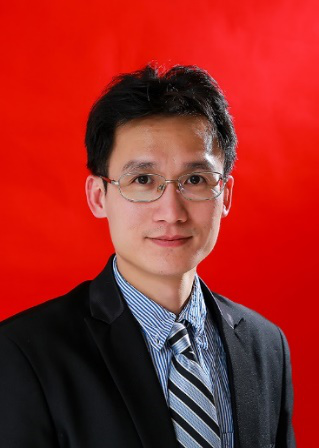

Office | Room 537, Biological Building, School of Life Sciences, 443 Huangshan road, Hefei, Anhui, China 230027 |
Tel | (+86) 551 63600805 |
chuanhai@ustc.edu.cn | |
Lab webpage |
Professor of School of Life Sciences
Dr. Fu joined School of Life Sciences at the University of Science and Technology of China as Professor in 2015. From 2011 to 2015, Dr. Fu was a tenure-track Assistant Professor of Department of Biochemistry at the University of Hong Kong, and was a post-doctoral fellow in the Department of Cell and Developmental Biology at the University of Pennsylvania from 2006 to 2011. He obtained his undergraduate and doctoral degrees in cell biology from the University of Science and Technology of China in 2001 and 2006, respectively. He is interested in the molecular mechanisms underlying organelle dynamics and cell plasticity and how these mechanisms contribute to disease development and progression. His work was published in journals, including Developmental Cell, Journal of Cell Biology, PLoS Biology, Genome Biology, Science Advances, Nature Communications, Redox Biology, Current Biology, Journal of Biological Chemistry, Cell Research. He serves as Associate Editor for Cellular and Molecular Life Sciences, Cell Biology International, and Molecular Biology of the Cell; Vice Chairman of the Cell Structure and Cell Behavior Branch of the Chinese Society for Cell Biology; and Director of the Anhui Province Key Laboratory of Chemical Biology and New-Quality Medicine.
Research key words: The cytoskeleton, mitochondria, Cell division, and organoids
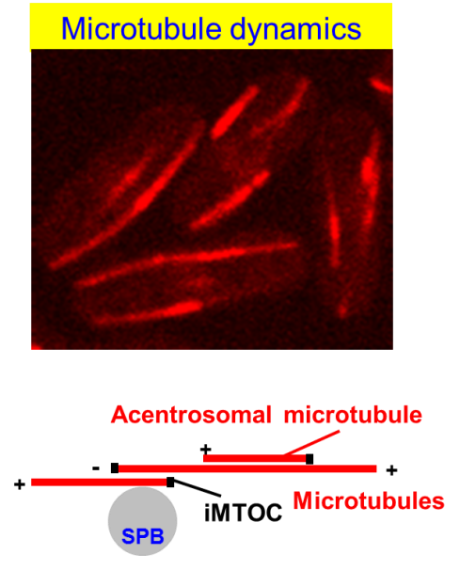
(1) Microtubule dynamics
Microtubules are hollow tubular structures composed of 13 protofilaments within which α-,β-tubulin heterodimers bind to one another in a head-to-tail fashion. This structural arrangement confers the physical properties of polarity and dynamics to microtubules and thus allows microtubules to have a wide range of cellular functions including transporting organelles, directing cell motility, and mediating chromosome segregation. It is often found that microtubule associated proteins (MAPs) are expressed abnormally, and/or mutated, in tumor cells, making MAPs highly relevant to tumorigenesis. Hence, our research efforts are focused on investigating how MAPs are involved in regulating microtubule dynamics and mediating formation of the cell-type specific microtubule arrays.
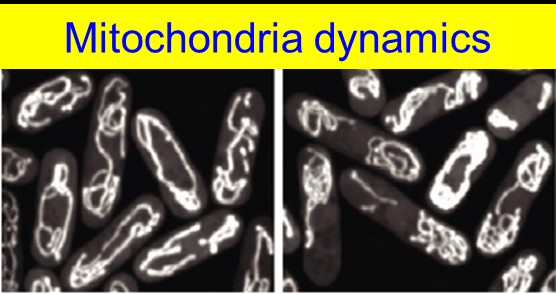
(2) Mitochondria dynamics
Mitochondria are the powerhouse of a cell, constantly undergoing fusion and fission and intimately interacting with the cytoskeleton. Mitochondria malfunctions are associated with neuron degenerative diseases, aging, and tumorigenesis. Employing high spatiotemporal resolution microscopy, yeast genetics, and biochemistry, we aim to reveal the molecular mechanisms underlying mitochondria dynamics and regulating microtubule-mitochondria interactions.
(3) Mitosis
Mitosis is a fundamental process of life. During mitosis, chromosomes are segregated and equally divided into two daughter cells. Mitosis errors are usually correlated with failures of chromosome segregation, leading to more severe problems such as genomic instability, birth defects and cancer. My laboratory is interested in understanding the fundamental molecular mechanisms underlying spindle and chromosome dynamics during mitosis. We combine yeast genetics, quantitative live-cell imaging, biochemical and cell biological approaches to dissect organization, dynamics and regulation of the spindle in the fission yeast Schizosaccharomyces pombe.

Selected publications(94 in total; *corresponding):
2) Jiang Y, Jian Y, Nie L, Gu X, Lu Z, Chu Y, Liu X, Yao X, Zhou JQ, Zheng S*, Fu C*. 2025. Effects of chromosome number reduction on mitotic and meiotic stability in fission yeast. Genome Biol. 26(1):232
3) Liu L, Wu Y, Liu K, Zhu M, Guang S, Wang F, Liu X, Yao X, He J*, Fu C.*. 2024. The absence of the ribosomal protein Rpl2702 elicits the MAPK-mTOR signaling to modulate mitochondrial morphology and functions. Redox Biol. 73:103174
4) Zhu M, Fang Z, Wu Y, Dong F, Wang Y, Zheng F, Ma X, Ma S, He J, Liu X, Yao X*, Fu C.*. 2024. A KDELR-mediated ER-retrieval system modulates mitochondrial functions via the unfolded protein response in fission yeast. J Biol Chem. 300(3):105754
5) Jian Y, Jiang Y, Nie L, Dou Z, Liu X, Fu C.*. 2023. Phosphorylation of Bub1 by Mph1 promotes the Bub1 signaling at the kinetochore to ensure accurate chromosome segregation. J Biol Chem. 105559. 300(1):105559
6) Wei W, Zheng B, Zheng S, Wu D, Chu Y, Zhang S, Wang D, Ma X, Liu X, Yao X*, Fu C*. 2022. The Cdc42 GAP Rga6 promotes monopolar outgrowth of spores. J Cell Biol. 222(1):e202202064
7) He J#, Liu K#, Wu Y, Zhao C, Yan S, Chen JH, Hu L, Wang D, Zheng F, Wei W*, Fu C*. 2023. Protein palmitoylation-mediated palmitic acid sensing causes blood-testis barrier damage via inducing ER stress. PLoS Biol. 21: e3002247
8) Wu Z, Xu H, Wang P, Liu L, Cai J, Chen Y, Zhao X, You X, Liu J, Guo X, Xie T, Feng J, Zhou F, Li R, Xie Z, Xue Y*, Fu C*, Liang Y*. 2022. The entry of unclosed autophagosomes into vacuoles and its physiological relevance. PLoS Genet. 8(10):e1010431
9) Wang X, Zheng F, Yi YY, Wang GY, Hong LX, McCollum D, Fu C*, Wang Y*, Jin QW.*. 2022. Ubiquitination of CLIP-170 family protein restrains polarized growth upon DNA replication stress. Nature Commun. 13(1):5565
10)Ge X, He Z, Cao C, Xue T, Jing J, Ma R, Zhao W, Liu L, Jueraitetibaike K, Ma J, Feng Y, Qian Z, Zou Z, Chen L, Fu C*, Song N*, Yao B*. 2022. Protein palmitoylation-mediated palmitic acid sensing causes blood-testis barrier damage via inducing ER stress. Redox Biol. 54:102380
11)Zheng S, Zheng B, Liu Z, Liu X, Yao X, Wei W*, Fu C*. 2022. The Cdc42 GTPase activating protein Rga6 promotes the cortical localization of Septin. J Cell Sci. 135(4):jcs259228
12)Dong F, Zhu M, Zheng F, Fu C*. 2022. Mitochondrial fusion and fission are required for proper mitochondrial function and cell proliferation in fission yeast. FEBS J. 2022 Jan;289(1):262-278 (Cover story)
13)Rasul F, Zheng F, Dong F, He J, Liu L, Liu W, Cheema J, Wei W*, Fu C*. 2021. Emr1 regulates the number of foci of the endoplasmic reticulum-mitochondria encounter structure complex. Nature Commun. 12(1):521
14)Zhang M#, Zheng F#, Xiong Y, Shao C, Wang C, Wu M, Niu X, Dong F, Zhang X*, Fu C*, Zang J*. 2021. Centromere targeting of Mis18 requires the interaction with DNA and H2A-H2B in fission yeast. Cell Mol Life Sci. 78(1):373-384
15)Zheng F#, Dong F#, Yu S, Li T, Jian Y, Nie L, Fu C*. 2020. Klp2 and Ase1 synergize to maintain meiotic spindle stability during metaphase I. J Biol Chem. 295(38):13287-13298
16)Zheng F#, Jia B#, Dong F, Liu L, Rasul F, He J, Fu C*. 2019. Glucose starvation induces mitochondrial fragmentation depending on the dynamin GTPase Dnm1/Drp1 in fission yeast. J Biol Chem. 294(47):17725-17734 (Cover story)
17)Zhu Q, Zheng F, Liu AP, Qian J, Fu C*, Lin Y*. 2016. Shape Transformation of the Nuclear Envelope during Closed Mitosis. Biophys J. 111(10):2309-2316
18)Syrovatkina V#, Fu C#, Tran PT. 2013. Antagonistic spindle motors and MAPs regulate metaphase spindle length and chromosome segregation. Curr Biol. 23: 2423-9 (#cofirst)
19)Fu C*, Jain D, Costa J, Velve-Casquillas G, Tran PT*. 2011. Mmb1p binds mitochondria to dynamic microtubules. Curr Biol. 21:1431-39 (*corresponding) (Cover story)
20)Fu C, Ward JJ, Loiodice I, Velve-Casquillas G, Nedelec FJ, Tran PT. 2009. Phospho-regulated interaction between kinesin-6 Klp9p and microtubule bundler Ase1p promotes spindle elongation. Dev Cell 17: 257-67
Staff and trainees
Postdoctoral fellow: Jiajia He, Di Zhang
Technician: Zhuoya Wu
Graduate students:Javairia Yousuf Cheema, Yongkang Chu, Ke Liu, Yifan Wu, Chenhui Zhao, Shuaijie Yan, Xin Zhang, Hui Yu, Lijin Wang, Zhiyi Lu, Mingyi Xu, Yifei Du, Kun Zhang
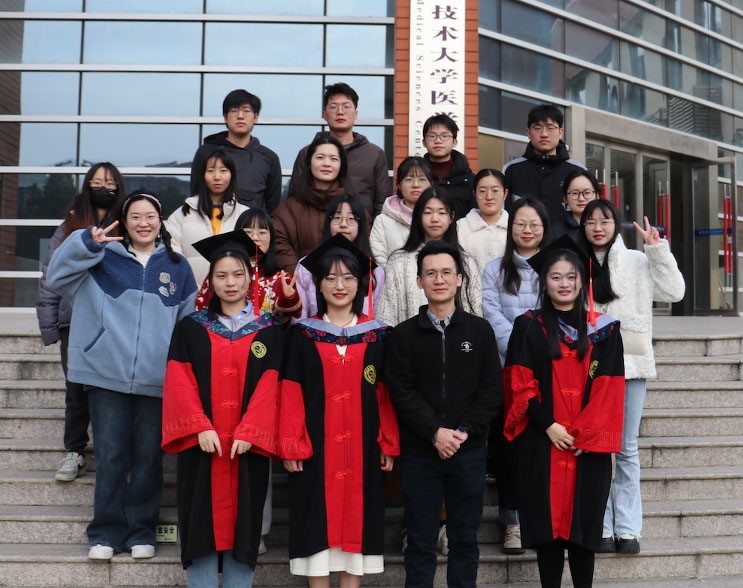
Research Opportunities
Our lab is equipped with multiple advanced imaging systems including a spinning disk confocal microscope. This enables trainees to conduct cutting-edge research projects. We are seeking motivated undergraduates, postgraduate students, and post-doctoral fellows to join our research team. Applicants with expertise in molecular and cellular biology are particularly welcome. Please contact Dr. Chuanhai Fu (chuanhai@ustc.edu.cn) directly with your CV and a description of your previous research experience.