

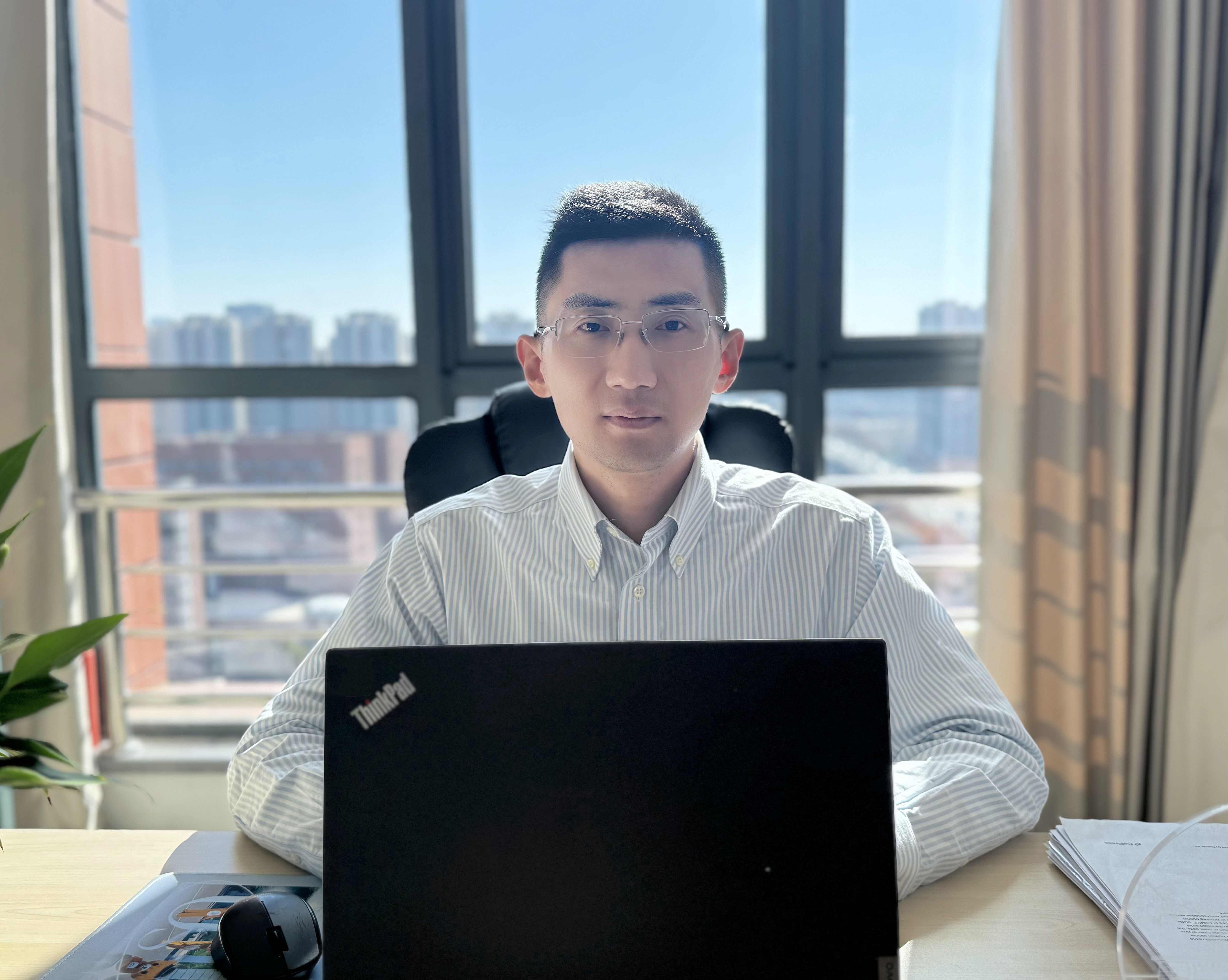

Dr. Zhu joined the Division of Life Sciences and Medicine at the University of Science and Technology of China (USTC) in 2023. Prior to this appointment, from 2015 to 2023, he held successive positions as a Postdoctoral Fellow and Instructor at The University of Texas MD Anderson Cancer Center, and subsequently served as a Research Associate at the Houston Methodist Research Institute. His research focuses on immunoregulation in the context of cancer and infectious diseases, with the aim of elucidating how T cells sense and respond to immune cues under both macro- and micro-environmental contexts, and to decipher the mechanisms underlying tumor immune editing. By translating fundamental discoveries into innovative immunotherapies and drug candidates, thereby facilitating clinical application. Research findings have been published in leading international journals, including Immunity, Nature Immunology, Nature Cell Biology, Journal of Experimental Medicine, Nature Communications, Blood, and Science Advances.
Primary Research Interests:
1. Mechanisms of T lymphocyte differentiation and activation in tumor immune responses.
2. Mechanistic insights into tumor immune editing and strategies for cancer immunotherapy.
3. Development of novel drugs and therapeutic approaches for immunotherapy.
Publication:
1. Y.C. Li, L.L. Zhu, C.J. Ko, J.Y. Yang, H.J. Wang, G. Manyam, J. Wang, X.H. Cheng, S.L. Zhao, Z.L. Jie (2023), TRAF3-EWSR1 signaling axis acts as a checkpoint on germinal center responses. The Journal of Experimental Medicine220(8):e20221483.
2. L.L. Zhu#, X.F. Zhou, M. Gu, J. Kim, Y.C. Li, C-J Ko, X.P. Xie, T.X. Gao, X.H. Cheng, and S- C Sun# (2022). Dapl1 suppresses CD8 T cell responses by controlling NFATc2 activation. Nature Cell Biology24(7):1165-1176(#co-corresponding author).
3. M. Gu, X. Zhou, J. H. Sohn, L.L. Zhu, Z. Jie, J. Y. Yang, X. Zheng, X. Xie, J. Yang, Y. Shi, H. D. Brightbill, J. B. Kim, J. Wang, X. Cheng and S. C. Sun (2021). NF-kappaB-inducing kinase maintains T cell metabolic fitness in antitumor immunity. Nature Immunology22(2): 193-204.
4. Li, Y., X. Xie, Z. Jie, L.L. Zhu, J. Y. Yang, C. J. Ko, T. Gao, A. Jain, S. Y. Jung, N. Baran, M. Y. Konopleva, X. Cheng and S. C. Sun (2021). DYRK1a mediates BAFF-induced noncanonical NF-kappaB activation to promote autoimmunity and B-cell leukemogenesis. Blood138(23): 2360-2371.
5. Xie, X., L.L. Zhu, Z. Jie, Y. Li, M. Gu, X. Zhou, H. Wang, J. H. Chang, C. J. Ko, X. Cheng and S. C. Sun (2021). TRAF2 regulates T cell immunity by maintaining a Tpl2-ERK survival signaling axis in effector and memory CD8 T cells. Cellular & Molecular Immunology18(9): 2262-2274.
6. L.L. Zhu, Y. Li, X. Xie, X. Zhou, M. Gu, Z. Jie, C. J. Ko, T. Gao, B. E. Hernandez, X. Cheng and S. C. Sun (2019). TBKBP1 and TBK1 form a growth factor signalling axis mediating immunosuppression and tumourigenesis. Nature Cell Biology21(12): 1604-1614.
7. L.L. Zhu, X. Xie, L. Zhang, H. Wang, Z. Jie, X. Zhou, J. Shi, S. Zhao, B. Zhang, X. Cheng and S. C. Sun (2018). TBK-binding protein 1 regulates IL-15-induced autophagy and NKT cell survival. Nature Communications9(1): 2812.
8. L.L. Zhu, T. M. Luo, X. Xu, Y. H. Guo, X. Q. Zhao, T. T. Wang, B. Tang, Y. Y. Jiang, J. F. Xu, X. Lin and X. M. Jia (2016). E3 ubiquitin ligase Cbl-b negatively regulates C-type lectin receptor-mediated antifungal innate immunity. Journal of Experimental Medicine213(8): 1555-1570.
9. X.M. Jia*, B. Tang*, L.L. Zhu*, Y. H. Liu, X. Q. Zhao, S. Gorjestani, Y. M. Hsu, L. Yang, J. H. Guan, G. T. Xu and X. Lin (2014). CARD9 mediates Dectin-1-induced ERK activation by linking Ras-GRF1 to H-Ras for antifungal immunity. Journal of Experimental Medicine211(11): 2307-2321.(*co-first author).
10. L.L. Zhu, X. Q. Zhao, C. Jiang, Y. You, X. P. Chen, Y. Y. Jiang, X. M. Jia and X. Lin (2013). C-type lectin receptors Dectin-3 and Dectin-2 form a heterodimeric pattern-recognition receptor for host defense against fungal infection.Immunity39(2): 324-334.
Open Positions:
The laboratory is continuously seeking highly motivated postdoctoral fellows and research associates with backgrounds in bioinformatics, immunology, cell biology, oncology, or related fields.
The laboratory also warmly welcomes undergraduate and graduate students.
Contact:
lzhu6@ustc.edu.cn